

Them Which Are Asleep
Die Ready, Part II. The Book uses a bedroom word for a graveyard thing.

The worst sentences in the English language get said within ten feet of a casket.
He is in a better place. God needed another angel. At least she is not suffering anymore. Everything happens for a reason.
Nobody believes half of them. People say them because the room is heavy and silence feels rude, and nobody ever handed them better words. So they reach for the shelf by the door, and that shelf is stocked with greeting cards and guesswork.
The Book hands you better words. That is this morning’s whole business. Yesterday the fear of death got named and served its eviction papers. Today is the day the fear thinks it wins. The casket day. What the Book calls a believer lying in one, and what to say to the people standing next to it.
Start with the word.
A man named Stephen was dragged out of Jerusalem and stoned for preaching Christ. Nothing about that scene is soft. Rocks coming down hard enough to kill, thrown by men who the Book says gnashed on him with their teeth. While it happened he asked God to receive his spirit, and asked forgiveness for the men throwing. Then the record closes his life like this.
“And he kneeled down, and cried with a loud voice, Lord, lay not this sin to their charge. And when he had said this, he fell asleep.” Acts 7:60
Fell asleep. Under the rocks.
The Holy Ghost watched the most violent death in the book of Acts and chose a bedroom word for it. That is not a writer going soft. The Book is never soft about facts, read Judges 19 sometime and try to call it soft. Something else is happening with that word, and it runs all the way through.
A ruler’s twelve-year-old daughter died before Jesus could reach the house. By the time he arrived the mourners were already working, flutes and wailing, the machinery a town runs when a child dies. Jesus walked into the middle of it and used nap language for a corpse.
“He said unto them, Give place: for the maid is not dead, but sleepeth. And they laughed him to scorn.” Matthew 9:24
They laughed at him. At a funeral. Every adult in that room knew dead when they saw it, and this preacher from Nazareth was talking like the girl was resting her eyes. Then he put them all out, took her by the hand, and the maid arose. Nobody recorded any laughing after that.
Lazarus, same word. “Our friend Lazarus sleepeth; but I go, that I may awake him out of sleep.” John 11:11. The disciples took it literally and figured a resting man was a recovering man, so he said it plain for them. “Then said Jesus unto them plainly, Lazarus is dead.” John 11:14. But look what he called the trip before they made him translate it. I go, that I may awake him. A wake-up call.
Here is why the word matters, and it is not sentiment.
Sleep is temporary by definition. That is the entire cargo of the word. Nobody holds a funeral for a man taking a nap. Nobody says a final goodbye to a woman who will be up and hungry by seven. You cannot honestly use the word sleep about something permanent. The word itself refuses to mean that.
So when the Book uses that word at a graveside, it is filing a claim. On the record. This condition ends.
And Paul tells you whose graves carry the claim. “But now is Christ risen from the dead, and become the firstfruits of them that slept.” 1 Corinthians 15:20. Firstfruits is farm language, the first of the crop out of the field with the whole harvest standing behind it. He woke first. Every believing grave since has that word hanging over it like a signed promise.
One thing has to be said straight, because the word gets mishandled. The person is not in the box, and the person is not unconscious somewhere waiting for an alarm. “We are confident, I say, and willing rather to be absent from the body, and to be present with the Lord.” 2 Corinthians 5:8. The sleeping is the body’s condition, not the soul’s. The Book puts the bedroom word on the part of a believer that lies down in the ground, because that is the part that gets woken up. Where the departed are right now is a different study. This morning belongs to the room you have to stand in. The one with the casket in it and the family in the folding chairs, where you stand with your hands in your pockets hunting for a sentence that will not make it worse.
The Book already wrote your material. It is below the line
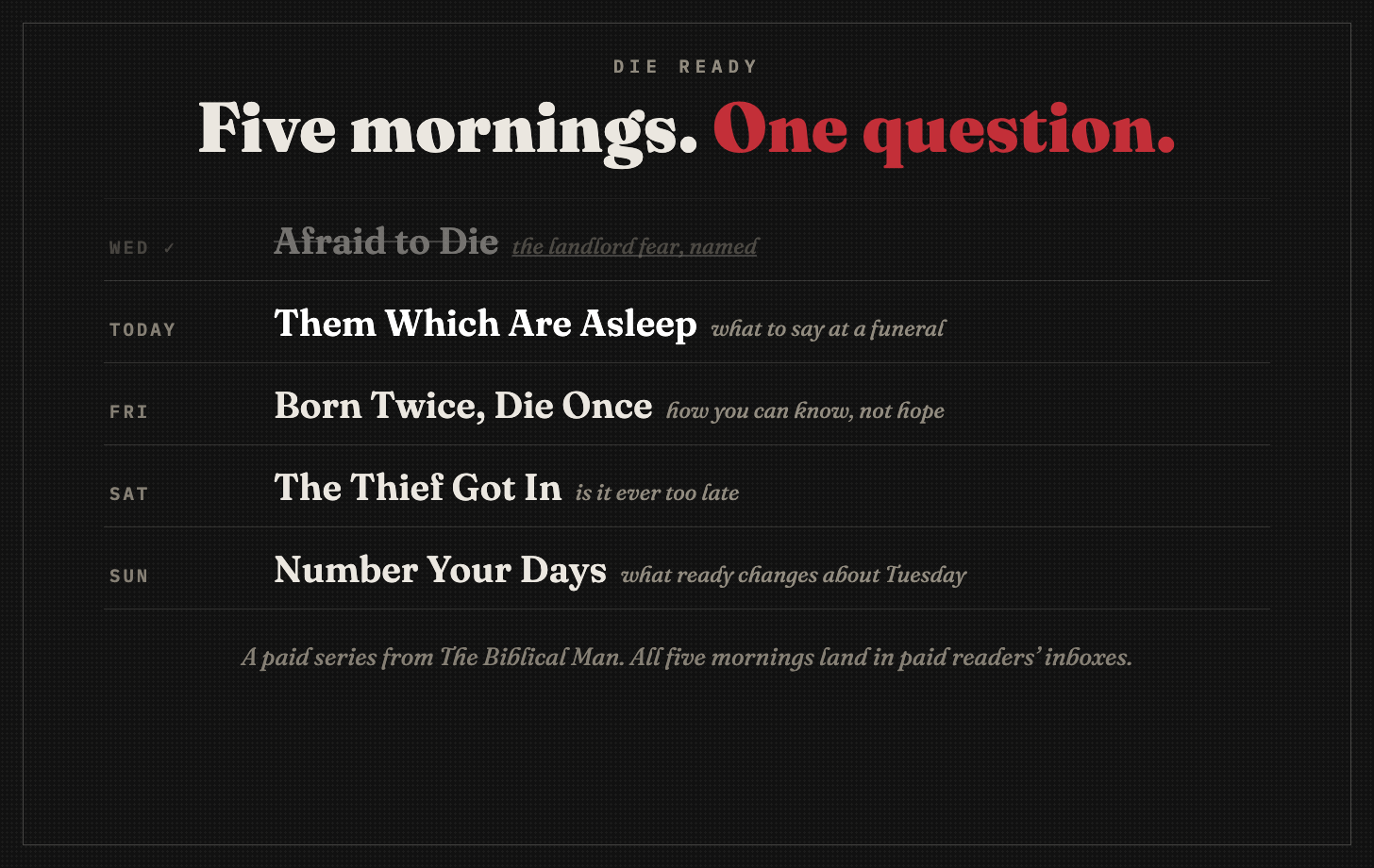
Die Ready is a paid series, and this is the morning it starts earning the name. The word was free, and it was always going to be. What you say with it three feet from a casket, that part keeps my mornings happening at this desk.
All five mornings land in paid inboxes before the coffee is done.
The Receiving Line
Below the line: the passage Paul wrote so nobody would have to freelance a funeral again, what it actually permits you to feel, the sentences that hold up in a funeral home hallway, and the ones to bury for good.
